
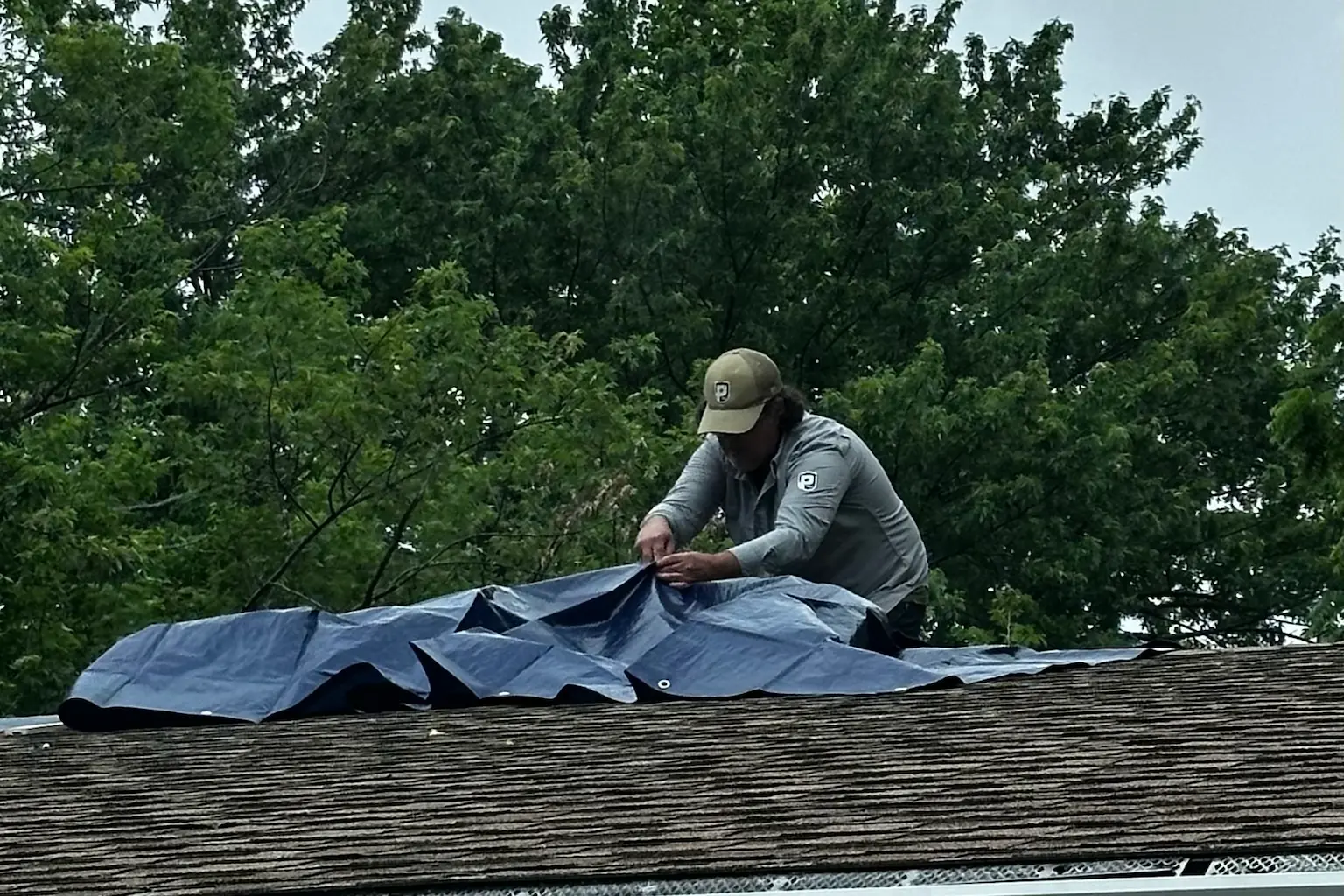
If your neighborhood in Colorado Springs recently experienced a hailstorm, you’ve probably already seen something that doesn’t make sense.
Colorado Springs hail damage is rarely uniform across a neighborhood—one homeowner gets a roof replacement approved, while another just a few doors away is told there isn’t enough damage to file a claim.
Same storm. Same street. Completely different outcomes.
I inspected two homes on the same block in eastern Colorado Springs after a recent hail event—and what I found explains why hail damage in this region is so inconsistent.
Table of Contents
- Real Inspection: Two Homes, Same Storm
- Why Colorado Springs Hail Damage Is So Uneven
- What Is a Hail Track?
- Why Insurance Results Differ on the Same Block
- What Most Homeowners Miss After a Hailstorm
- High-Risk Hail Areas Near Colorado Springs
- When to Get a Roof Inspection
Real Inspection: Two Homes, Same Storm
I inspected two homes on the same block after a recent Colorado Springs hailstorm.
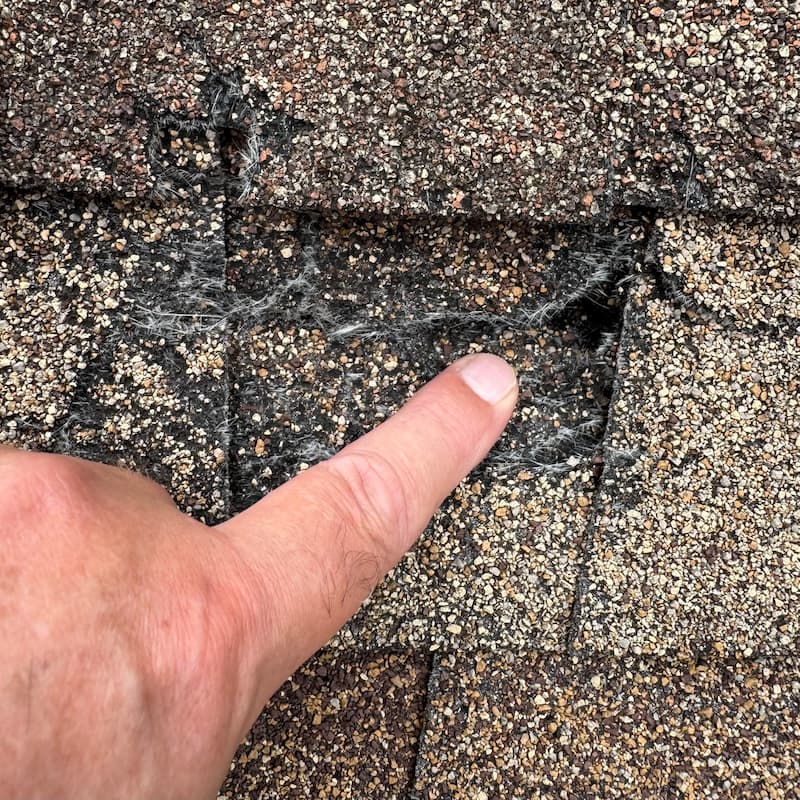
The first roof showed clear hail impact:
- Consistent shingle bruising
- Granule loss exposing asphalt mat
- Dented gutters and downspouts
- Impact marks on vents and soft metals
👉 Related: Colorado Springs Roof Inspection Services
The second home, just a few doors away, showed limited and inconsistent impact patterns that did not meet functional damage thresholds.
Same storm system. Different exposure inside the storm path.
Why Colorado Springs Hail Damage Is So Uneven
Colorado sits in one of the most active hail regions in the United States.
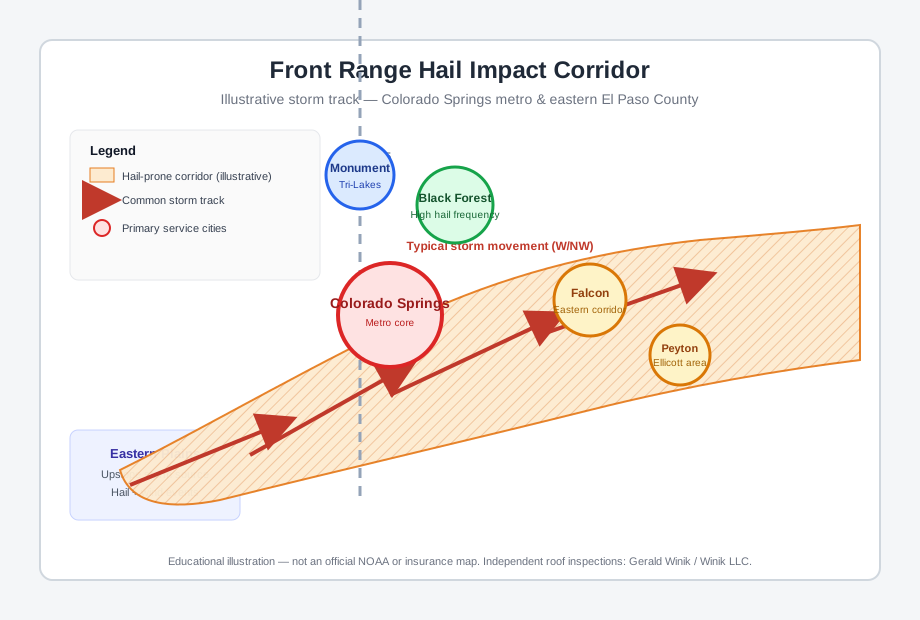
But hail doesn’t fall evenly—it moves in narrow corridors called hail tracks.
These tracks create pockets of intense damage within larger storm systems.
👉 Learn more: How Hail Damage Insurance Claims Work
That’s why Colorado Springs hail damage often looks inconsistent across the same neighborhood.
What Is a Hail Track?
A hail track is a concentrated path of damaging hail within a storm system.
These form when storms:
- Develop over the Front Range
- Intensify across the Eastern Plains
- Shift with wind shear and elevation changes
- Drop uneven hail distribution across neighborhoods
This is why Falcon, Peyton, Black Forest, and eastern Colorado Springs often see drastically different storm outcomes.
Why Insurance Results Differ on the Same Block
Insurance companies do not evaluate storms—they evaluate roof-level evidence.
Two homes can receive different outcomes due to:
- Roof slope direction and exposure
- Density of hail strikes
- Wind direction during the storm
- Existing roof condition before impact
- Location inside the hail track
👉 Related service: Free Storm Damage Evaluation
This is why Colorado Springs hail damage claims can vary even on the same street.
What Most Homeowners Miss After a Hailstorm
Most hail damage is not visible from the ground.
A roof can look normal while still having:
- Bruised shingles
- Granule loss
- Soft metal dents
- Compromised waterproofing layers
These issues often don’t leak immediately, which is why damage is frequently discovered months later.
High-Risk Hail Areas Near Colorado Springs
Certain areas are more frequently impacted due to storm patterns:
- Falcon
- Peyton
- Black Forest
- Calhan
- Ellicott
- East Colorado Springs
- Rural El Paso County
These regions often sit directly in recurring Eastern Plains hail tracks.
👉 External reference: NOAA Storm Events Database
https://www.ncei.noaa.gov/access/search/data-search/storm-events
When to Get a Roof Inspection
If your home was in a recent Colorado Springs hailstorm path, an inspection is recommended if:
- Neighbors are getting repairs or replacements
- You notice dents on gutters or vents
- A major storm passed in the last 6–24 months
- You are unsure if damage exists
👉 Schedule inspection: Book a Roof Inspection
Early inspection helps determine whether your home was inside a hail track impact zone before damage worsens or becomes harder to document.

Final Takeaway
Colorado Springs hail damage is not random—but it is uneven.
Two homes. Same block. Same storm.
Different outcomes based on where each home sat inside the hail track.
Understanding that difference is the key to knowing whether your roof was actually affected.